How to Use an Espresso Machine: A Beginner’s Guide to Brewing Great Espresso
A Simple, Step-by-Step Guide to Pulling Delicious Espresso at Home or in your Café
Brewing espresso is easy once you understand the key steps and how grind size affects your shot. This beginner espresso guide walks you through how to use an espresso machine from start to finish - prepping your machine, dosing, tamping, extraction, steaming milk and how to adjust the grind. Espresso is highly sensitive to many variables - grind size, dose, tamp pressure and extraction time all play major roles in how your shot tastes. Even small changes to any of these factors can noticeably affect the flavour and quality of your espresso. Once you understand the fundamentals, you’ll be able to pull consistently great espresso shots, whether you’re brewing at home or in your café. Barista accessories can make your workflow easier and your brewing more consistent — click here to see our top recommendations.



1. Warm Up Your Machine
Turn on your espresso machine and allow it to heat up fully
Once heated up, run a quick “blank shot” (water only) to warm the group head and cup
2. Grind Your Coffee (This is one of the most important steps - more detail on how to adjust the grind further down the page)
Use fresh coffee beans and grind them just before brewing
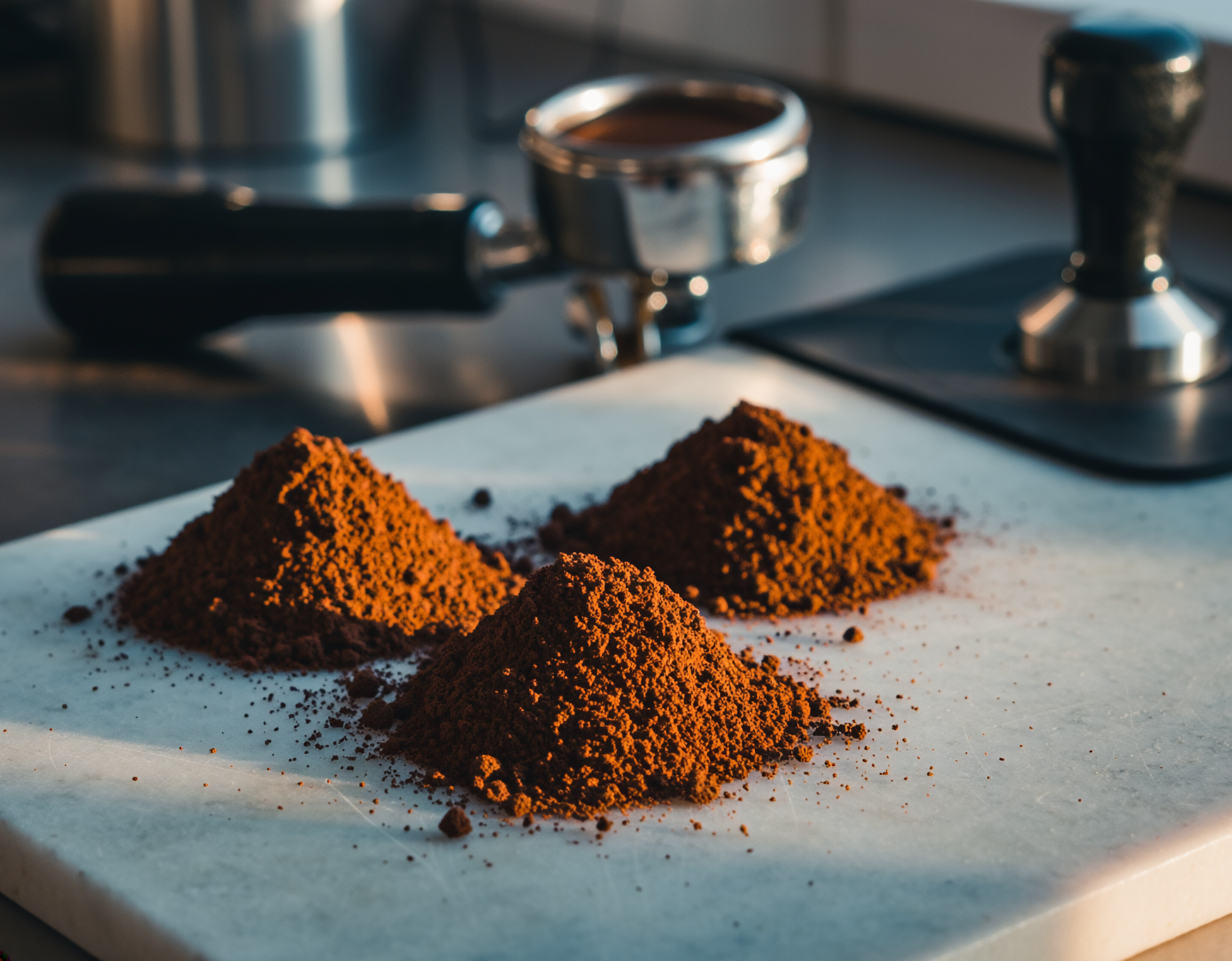
Start with a fine grind, similar to table salt.
A standard espresso uses 18–20g of coffee (varies by basket)
3. Dose the Coffee
Start with a clean, dry portafilter
If using scales for dosing - place the portafilter on your scales and tare (zero) it
Grind in your desired dose (e.g. 18g)
Evenly distribute the coffee by tapping the portafilter on the counter two times
If not using scales, level off so basket is not over filled (swipe finger, dosing funnel or something flat across the top of the basket to remove excess coffee)
Consider using a dosing ring to prevent coffee wastage
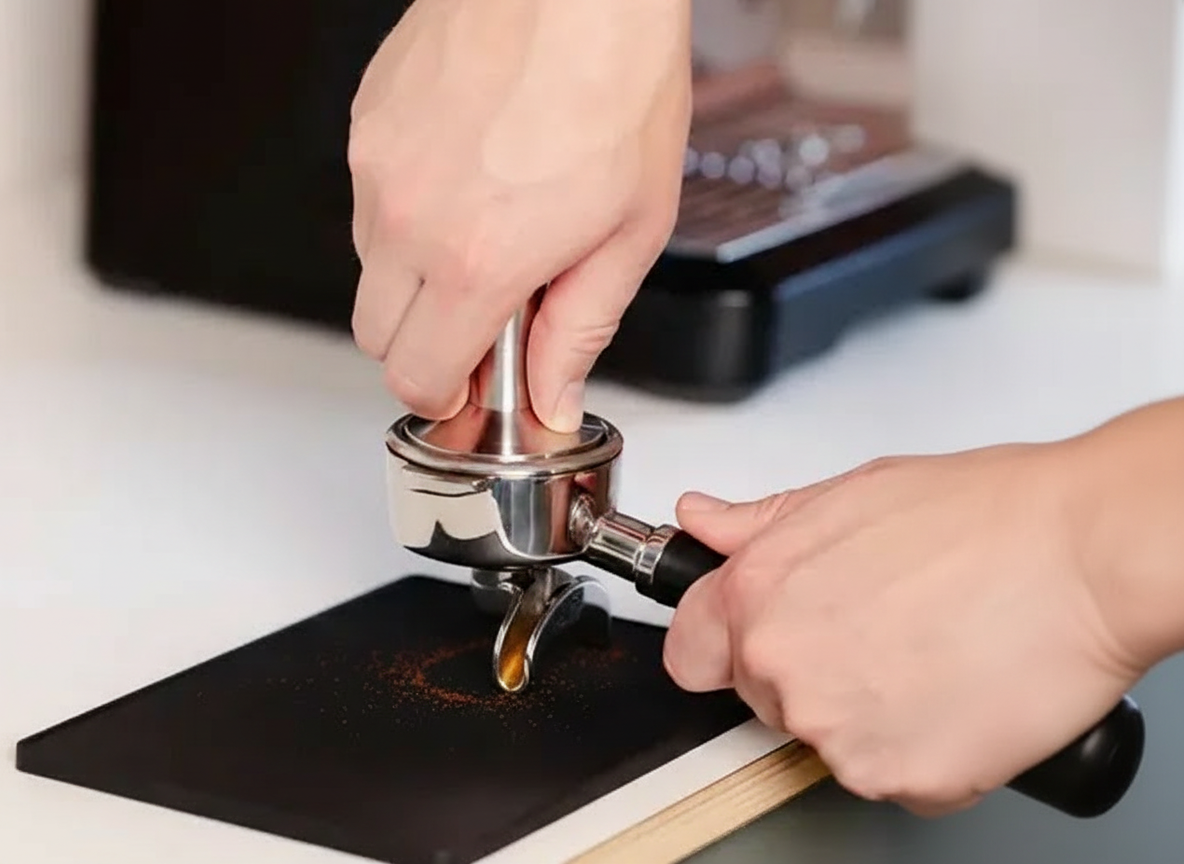
4. Tamp Evenly
Hold the portafilter steady on a flat surface (we highly recommend a tamp mat to prevent damage to your countertops and portafilter)
Tamp straight down with firm, even pressure
The puck should look smooth and level
5. Start the Shot (Extraction)
Insert the portafilter firmly into the group head
Place your cup underneath
Begin extraction immediately after locking in the portafilter
A good espresso shot should:
Take 20–25 seconds for a 30ml (single) shot
Take 25–30 seconds for a 60ml (double) shot
The extraction should be slow and thick
If your shot is running too fast or too slow, you need to adjust your grind — see troubleshooting below.
6. Steam Your Milk
Purge the steam wand first to remove condensation, then submerge the wand tip just below the surface of the milk. Rest the wand in the spout of the jug then angle it so the steam wand is off centre, this will create a whirlpool in the milk
Turn the steam on fully
With the wand just below the surface, lower the jug slightly to create a gentle “paper tearing” or soft hissing sound. This is how you introduce air into the milk (stretching)
The longer you introduce air, the more foam you will have. For a flat white, you only want to stretch for around 2 seconds, for a latte 3-4 seconds, and around 6 seconds for a cappuccino
Once you have stretched your milk, raise the jug slightly so the wand is deeper in the milk and no longer making a hissing sound. Make sure you are still creating a whirlpool
Stop steaming just before the temperature reaches 60 degrees
Wipe your steam wand with a damp cloth and purge after each use
Tap and swirl the jug to smooth the texture before pouring
Wipe your steam wand with a damp cloth and purge after each use
7. Clean Your Machine
After each shot:
Knock out the puck.
Rinse the portafilter.
Run a short water flush through the group head
Clean your steam wand
Regular cleaning with espresso machine cleaner is important to help keep your espresso tasting great and your machine in good condition. How often you need to clean your machine will depend on usage.

Troubleshooting: How to Adjust the Grind
Grind size is the single biggest factor affecting your espresso. Use this guide to fix under-extracted (sour, fast) or over-extracted (bitter, slow) shots.
Think of water running through a bucket of sand (finer grind) vs a bucket of pebbles (coarser grind). It will flow much slower through sand, and faster through pebbles. Therefore, if the shot is running too fast, we need to make the grind finer to slow it down. If the shot is running too slow, we need to make the grind coarser to speed it up.
summary of key info
Good shot 25 - 30 seconds (for 60ml double shot)
Fast shot → Grind finer
Slow shot → Grind coarser
Sour → Finer grind / longer time
Bitter → Coarser grind / shorter time
Uneven flow → Improve distribution & tamp consistency
If your shot is running too fast, and tastes weak or watery
Shot completes in under 24 seconds, pale crema, sour, thin taste
Possible causes:
Grind too coarse
Dose too small
Under-extraction
Try these options, making one adjustment at a time until you reach desired extraction:
Grind finer (turn your grinder one step finer). A finer grind increases resistance, slowing extraction.
Increase dose slightly (e.g.1g)
Check your tamp is firm and even
If your shot is running too slow, and your espresso tastes harsh or bitter
Shot dripping or not coming out at all, takes longer than 30 seconds, very dark crema, bitter, harsh taste
Possible causes:
Grind too fine
Over tamping (tamping too much / too hard)
Over-extraction
Try these options, making one adjustment at a time until you reach desired extraction:
Grind coarser (turn your grinder one step coarser). A coarser grind reduces resistance, speeding up extraction.
Ensure you don’t over tamp
Make sure you aren’t putting too much coffee into the portafilter
If your shot channels (sprays, spurts, or gushes unevenly)
Make sure coffee is distributed evenly before tamping (tap portafilter twice on countertop to help distribute grounds evenly) and ensure you are tamping level
Check for worn burrs and replace if necessary